Septic tank maintenance can be confusing—especially with all the chemical treatments out there. You might see products that promise to kill odors, eliminate bacteria, or keep your system fresh. But what’s safe? What’s effective? And what could actually harm your system in the long run?
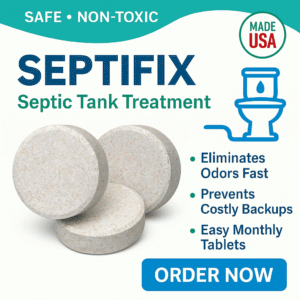
This article breaks it down clearly, and even introduces a better, easier alternative: SEPTIFIX.
Types of Chemical Treatments You’ll Encounter
Oxygenating & Enzyme-Based Additives
These are marketed to boost digestion and freshen your septic tank. For example, products like Eco‑Tabs contain oxygen-releasing compounds (like sodium percarbonate), molasses, bacterial spores, and buffers to improve pH and reduce odor.
Harsh Disinfectants & Odor Masks
Some treatments use bleach, chlorine, or quaternary ammonium compounds to kill bacteria and cover up odors. But they can also destroy the natural bacteria that your tank needs to treat waste properly.
Industrial Chemicals
In large-scale wastewater treatment, you’ll find coagulants, defoamers, pH-adjusters, or membrane cleansers. These tools don’t belong in home septic systems and can do more harm than good.
What Experts & Research Say
The U.S. EPA and environmental studies show that most septic additives—especially microbial types—don’t significantly enhance tank performance, sludge reduction, or effluent quality in a meaningful way. They note that well-maintained systems show the best results. ([turn0search14])
Plus, treatments that dissolve scum quickly can push organic solids out into the drain field, risking clogging or biomat formation. That can cause long-term damage.
Real-world advice backs this up: “Artificial bacteria is all marketing,” says a licensed septic pro. “Your tank has enough bacteria already. Just maintain it properly.”
When Chemical Treatments Backfire
“These don’t improve anything and could shorten your drain field’s life. Avoid them unless your tank is brand new or you’ve explicitly been told by a professional.”
—A seasoned operator’s warning
Many Septic professionals recommend: stick to regular pumping, avoid grease, wipes, and harsh cleaners, and let nature (with some help) do its job.
Still Considering Treatment? Here Are What’s Safer
- Oxygen-releasing enzyme products like Eco-Tabs may help with odor control and buffering pH. But they’re not game-changers and won’t restore failing systems. ([turn0search1])
- Adding bleach or disinfectants might be allowed in tiny doses in some regions—but they’re not a fix and can disrupt your tank’s bacteria. ([turn0search1])
- Focusing on habits like avoiding harmful chemicals, limiting grease, and pumping regularly are your best defense.([turn0news11], [turn0reddit19])
A Cleaner Alternative: Why SEPTIFIX Stands Out
If the goal is to keep your septic tank healthy without harsh chemicals or complicated instructions, SEPTIFIX hits the sweet spot:
- Flushable tablet—no measuring or mixing
- Releases oxygen and supports good bacteria, without killing them
- Controls odor in 3–5 days, naturally
- Breaks down solids, grease, and sludge safely
- Just one flush a month keeps it going
Try SEPTIFIX today—effective, septic-safe maintenance, no guesswork needed.
Bottom Line
Chemical treatments—especially harsh ones—can damage your septic system more than help it. Studies and experts agree: good habits and regular maintenance are your best protection.
That said, if you want a simple, effective product that respects septic biology and gets results fast—SEPTIFIX is a smart choice. No pumps, no spills, just monthly care that works.